
How Virtual Cards Simplify Global Business Payments
Businesses today operate across borders dealing with various currencies, tax laws, and financial systems. Traditional methods of handling payments, such as wire transfers, checks, or even physical cre
Businesses today operate across borders dealing with various currencies, tax laws, and financial systems. Traditional methods of handling payments, such as wire transfers, checks, or even physical credit cards, often present challenges such as high transaction fees, security concerns, and administrative overhead. Virtual cards — a new payment technology that is fast gaining ground in today's worldwide business community. Virtual cards, or virtual credit cards and virtual debit cards, are digital equivalents of traditional payment cards designed for electronic and online payments. While they appear much like traditional credit or debit cards, virtual cards are purely digital and thus a useful tool for simplifying worldwide business payments. In this blog post, we will explore how virtual cards work, the benefits they bring to global business payments, and how they simplify and streamline international transactions.
1. What Are Virtual Cards?

Virtual cards are payment cards that exist virtually and function in the same way as conventional credit or debit cards. But unlike normal cards, virtual cards are not delivered physically. They can only be used on Internet transactions and hence are well-suited for business-to-business (B2B) payments, e-commerce, and subscriptions. A virtual card is linked to a genuine bank account or credit card but carries a unique data set, such as a card number, expiry date, and security code, which may be employed for Internet shopping or digital transactions.
There are two main types of virtual cards:
Single-use Virtual Cards: These are temporary cards that are intended to be used in a one-time transaction. When paid, the card becomes ineffective, providing maximum security to companies that intend to inhibit fraud or abuse.
Multi-use Virtual Cards: They are re-usable cards to be utilized again and again on a long time period basis, similar to a traditional physical card. Multi-use cards tend to be issued for continuous business expenses, i.e., membership dues or recurring vendor payments.
Virtual cards may be issued by banks, financial institutions, or payment processors and can be managed simply through an online portal or mobile app. Cards are gaining popularity with both individuals and businesses because of their simplicity, convenience, and security features.
2. The Challenges of Traditional Global Business Payments

Before delving into how virtual cards make cross-border payments easier, let's learn about the pains that come with using traditional payment solutions.
1. High Transaction Fees
All cross-border transfers, wire transfers, and currency conversion charges have very high fees, which are likely to add up very fast. For companies dealing in cross-border payments to customers, partners, or suppliers on a regular basis, such fees will certainly eat into profit margins.
2. Currency and Exchange Rate Issues
Operating on an international scale involves working with numerous currencies. Changing currencies takes time and money, and companies can have bad exchange rates when paying or receiving foreign currency.
3. Delayed Payments
Wired transfers made using conventional payment infrastructure are received in a few days. That is inconvenient for companies that have to make on-time payments or get payments quickly in order to support cash flow.
4. Security Risks
In cross-border high-value payments, the companies are exposed to payment disputes, identity theft, and fraud. Security hacks would be costly and time-consuming to fix.
5. Complex Administrative Processes
Cross-border payments usually involve dealing with many payment gateways, bank accounts, and regulatory compliance, which is a nightmare for accounting staff. Monitoring payments, payment settlement promptly, and handling multiple payment modes can be overwhelming for firms, particularly those that have operations in various geographies.
3. How Virtual Cards Simplify Global Business Payments
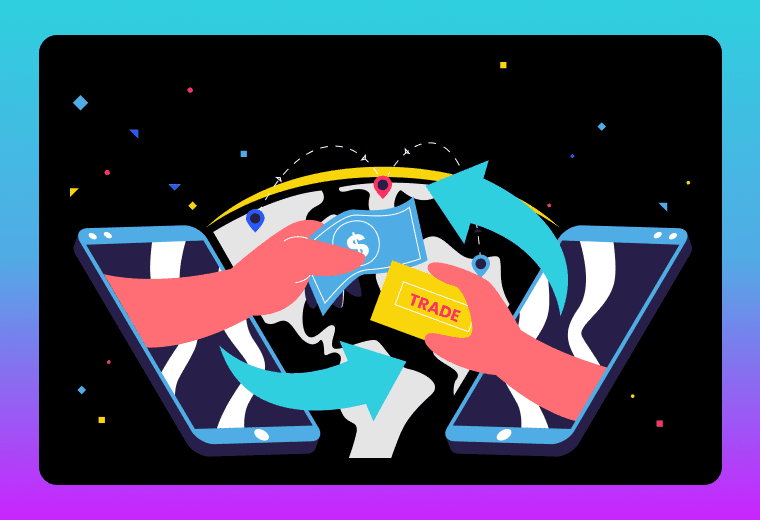
Virtual cards are quickly becoming a game-changer for companies that want to bridge the limitations of conventional payments. Here's how they make and ease international business payments:
1. Lower Transaction Fees
The greatest advantage of virtual cards may lie in that they save transaction fees. As virtual cards exist online, they cut out brokers such as banks or financial institutions that historically incur very high transaction fees for cross-border payments. Virtual card issuers mainly have competitive or zero fees for foreign payments. Virtual cards also cut out foreign exchange fees by enabling businesses to settle in other currencies with more favorable exchange rates.
2. Real-Time Payments and Instant Settlements
Unlike standard wire transfers that are settled within days, virtual card purchases occur in real time. This makes virtual cards particularly well-suited for high-priority payments, allowing businesses to pay in real time. To pay a supplier, pay a recurring subscription, or buy online, virtual cards provide near-instant payment options.
Secondly, virtual cards provide the ease of automatic payments, wherein regular payments, like subscription or service charges, are made on time without any human intervention. Not only does this save administrative time, but it also makes sure that companies will never miss a payment deadline.
3. Enhanced Security and Fraud Protection
Security is of prime importance to companies that are sending international payments. Virtual cards provide businesses with enhanced security against identity theft and fraud. Virtual cards differ from physical cards in the sense that they can be used to pay for certain transactions or merchants, and the card spending limits can be set differently. For instance, a business can present a virtual card to pay once or limit the card's spending power so that overspending cannot take place.
Other systems of virtual cards also provide tokenization and encryption technologies, which secure card information when one is making a payment. If a virtual card is lost or used fraudulently, corporations are conveniently able to freeze or cancel the card without hindering other accounts or ongoing transactions.
Second, online cards allow businesses to monitor and see every single transaction in real-time, which gives an extra layer of security and transparency. In case there's something amiss, businesses can immediately spot fraudulent transactions and react immediately.
4. Currency Flexibility and Global Reach
Virtual cards by their nature are global transactional, and therefore, they are an ideal fit for global companies. Most virtual card issuers support businesses that maintain many currencies in one account, and payments can be accepted in local currency without conversion hassles.
Secondly, as virtual cards are supported by almost all online businesses and payment platforms, companies can easily pay their suppliers, partners, or customers anywhere on the planet. With this global coverage, cross-border payments become easier, less likely to be slow or incorrect, and reduce the necessity for companies to have numerous payment systems or bank accounts across various nations.
5. Simplified Administrative Processes
Foreign payments are easier to manage with the assistance of virtual cards. Virtual card issuers tend to have web-based interfaces or mobile platforms that companies can utilise to issue, manage, and view their virtual cards in real-time. Such platforms typically accommodate detailed expenditure reports and analytics by which companies can monitor spending and maintain control over budgets.
Virtual cards also make expense management easier. With virtual cards to various departments, projects, or vendors, companies can organize their accounting system, get greater visibility into where they are spending money, and limit over-spending or fraud. By tracking and reporting in real time on transactions, companies can eliminate the hassles of manual reconciliation and maintain their accounting records current and accurate.
6. Scalability and Flexibility
For increasing global business operations, virtual cards provide the scalability and flexibility needed to expand quickly and effectively. Virtual cards can be rolled out to new departments, employees, or geographies as the company expands without the hassle of paperwork or new banking accounts.
Additionally, virtual cards can be made to meet the needs of various departments or regions. For instance, an organization can create a virtual card with a predetermined spending limit for marketing purposes or set up a separate virtual card for travel payments. This is made possible by the ability of virtual cards to customise payment systems according to individual business needs and therefore serve as a flexible and scalable solution.
4. Conclusion
As international business transactions grow and grow, businesses need efficient, secure, and inexpensive payment solutions more urgently. Virtual cards are an exciting alternative to conventional payment solutions, and businesses benefit from a hassle-free, flexible, and secure way of making cross-border payments. From reducing transaction fees to better cash management, virtual cards make cross-border business payments easy and enable businesses to do what they excel at — grow and stay profitable.
One such platform enhancing the ease of global payments is Oppi Wallet. As a digital wallet designed to support seamless virtual card usage, Oppi Wallet allows businesses to issue virtual cards, manage payments, and monitor transactions in real-time. With its multi-currency support and global reach, Oppi Wallet provides businesses of all sizes the tools to manage international payments efficiently, securely, and without the hassle of traditional banking systems.
Whether you're a small business looking to expand internationally or a multinational managing complex global operations, virtual cards through platforms like Oppi Wallet offer an efficient, scalable solution. As electronic payment technologies continue to evolve, virtual cards will play an even more prominent role in shaping the future of global business transactions.